
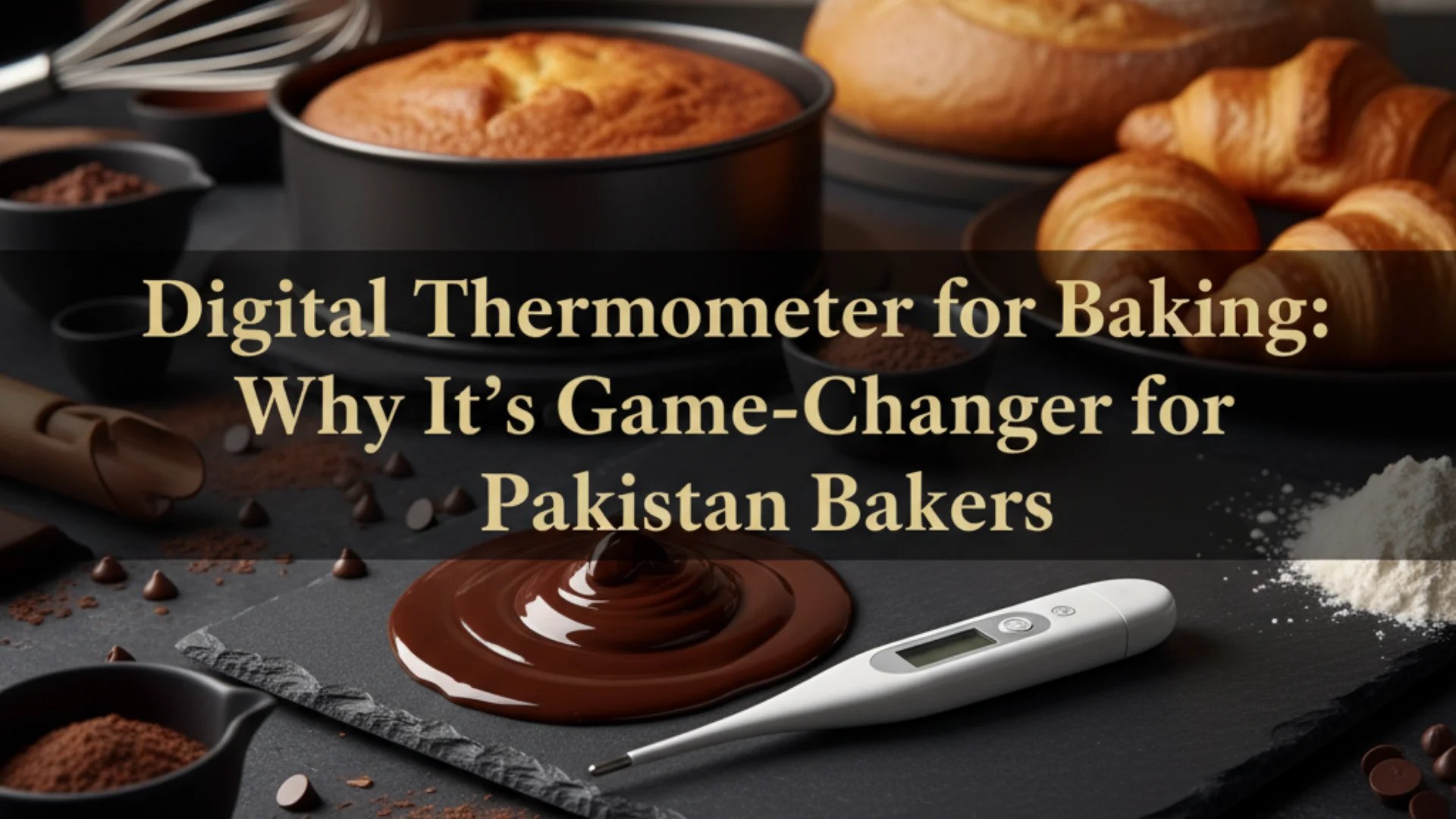
The Small Tool That Can Transform Your Baking Results
Many baking failures happen because of incorrect temperatures rather than bad recipes. Whether you’re melting chocolate, preparing caramel, making meringue, or checking bread doneness, temperature plays a crucial role in the final result. Unfortunately, many home bakers in Pakistan still rely on guesswork, which often leads to inconsistent outcomes. A digital thermometer removes that uncertainty by providing quick and accurate temperature readings.
It helps bakers achieve more consistent results while reducing costly mistakes. For anyone serious about improving their baking skills, this simple tool can make a significant difference.
Why Temperature Matters in Baking
Baking is a science, and even small temperature changes can affect texture, flavor, and appearance. Chocolate can lose its shine if overheated, sugar can burn during caramelization, and bread can remain undercooked in the center despite looking ready on the outside. Many recipes require precise temperature control to achieve the desired result. This is especially important for advanced baking techniques where accuracy directly impacts quality. Understanding temperature allows bakers to make better decisions and avoid common baking problems.
Temperature affects:
- Texture and consistency
- Baking accuracy
- Overall recipe success
Best uses:
- Chocolate tempering
- Sugar and caramel work
- Checking bread and cake doneness
How a Digital Thermometer Improves Baking Results
One of the biggest advantages of a digital thermometer is consistency. Instead of relying on appearance alone, bakers can confirm whether ingredients have reached the exact temperature required by a recipe. This leads to fewer mistakes and more predictable outcomes. It also helps save ingredients because recipes are less likely to fail due to overheating or underheating.
For home bakers running small businesses, consistency is essential because customers expect the same quality every time. Accurate temperature readings make that possible.
Key benefits:
- More reliable baking results
- Reduced ingredient waste
- Better consistency between batches
Essential Baking Tasks That Require Temperature Control
Chocolate Tempering
Tempering chocolate requires precise temperatures to achieve a glossy finish and clean snap. Even a few degrees can affect the final texture. A digital thermometer helps maintain accuracy throughout the process and improves success rates significantly.
Caramel and Sugar Syrups
Sugar changes quickly as temperature rises. Without accurate readings, caramel can easily burn or become too soft. Using a thermometer allows bakers to reach the exact stage needed for their recipe.
Bread and Cakes
Many bakers judge doneness based only on appearance, but internal temperature provides a more reliable indicator. This is especially useful for larger cakes and artisan breads where the center may not be fully baked.
Why Pakistani Bakers Benefit Even More
Pakistan’s climate can affect ingredients differently throughout the year. High temperatures during summer can impact chocolate, buttercream, and other temperature-sensitive recipes. A digital thermometer helps bakers adapt to these conditions by giving accurate measurements regardless of the weather. It also reduces the risk of baking errors caused by environmental factors. Whether you’re baking at home or running a small bakery business, temperature control helps maintain consistent quality throughout the year.
Common challenges it solves:
- Chocolate melting issues
- Inconsistent baking results
- Seasonal temperature variations
Common Mistakes a Digital Thermometer Helps Prevent
Many baking mistakes happen because ingredients are either too hot or too cold when used. Overheated chocolate can seize, sugar can burn, and undercooked cakes can collapse after cooling. A digital thermometer helps identify these issues before they ruin the recipe.
Instead of relying on visual cues alone, bakers can make decisions based on accurate measurements. This reduces frustration and increases confidence in the kitchen.
Mistakes to avoid:
- Overheating chocolate
- Burning sugar syrups
- Underbaking cakes and bread
Digital Thermometer
A Digital Thermometer is one of the most useful tools a baker can own because it provides instant and accurate temperature readings. Unlike traditional thermometers, digital models are faster and easier to use, making them ideal for both beginners and experienced bakers. They help remove guesswork from recipes and ensure ingredients reach the correct temperature before moving to the next step.
Whether you’re making chocolate decorations, checking cake doneness, or preparing sugar syrups, a digital thermometer improves precision. For Pakistani bakers dealing with varying weather conditions and kitchen temperatures, it becomes even more valuable.
Conclusion
A digital thermometer may seem like a small tool, but its impact on baking is enormous. It improves accuracy, reduces mistakes, and helps bakers achieve more consistent results across a wide range of recipes.
From chocolate tempering to caramel making and checking cake doneness, precise temperature control can significantly improve the quality of your baking. For Pakistani bakers who want professional-level results at home or in a small business, a Digital Thermometer is one of the smartest investments they can make. The more control you have over temperature, the better your baking results will be.
FAQ’s
Do beginner bakers need a digital thermometer?
Yes, a digital thermometer helps beginners avoid common temperature-related mistakes and achieve more consistent results from the start.
Can I use a digital thermometer for chocolate tempering?
Absolutely. Chocolate tempering requires precise temperatures, making a digital thermometer one of the most useful tools for the job.
Is a digital thermometer useful for cakes and bread?
Yes, it helps confirm whether baked goods are fully cooked internally rather than relying only on appearance.
Does a digital thermometer improve baking accuracy?
Yes, it provides precise temperature readings that help reduce errors and improve consistency across different recipes.